

There is no single best split. The one rule that actually matters is training each muscle group at least twice a week, and your split simply falls out of how many days you train. Push/pull/legs, upper/lower or full body: the label matters far less than most people think. On Tussen de Set, natural bodybuilder and coach Robin Donk turns the endless split debate on its head and explains what really moves the needle.
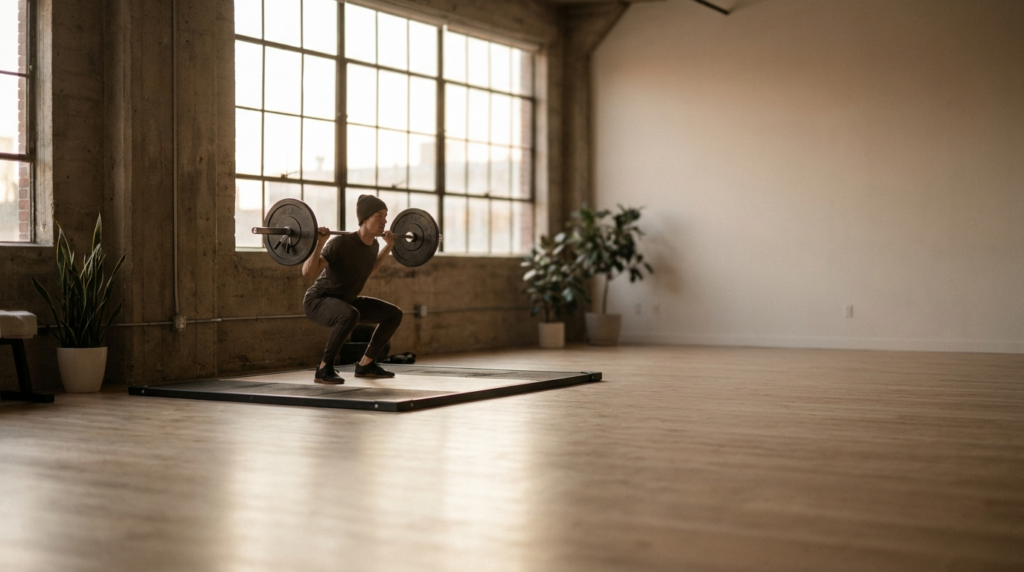
The one rule: train each muscle group twice a week
Robin keeps the science refreshingly simple: train every muscle group at least twice a week, and how you arrange that is largely up to you. Hitting a muscle twice weekly gets you the lion’s share of your progress, and each additional day adds a little less on top. Once you accept that rule, the sensible split for your week more or less picks itself.
Which split fits how many training days?
Because you want to train each muscle group twice a week, your number of gym days quietly decides the smartest layout:
- 2 to 3 days → Full body. The only realistic way to reach everything twice a week.
- 4 days → Upper/lower (or front/back). Every muscle group still comes round twice.
- 6 days → Push/pull/legs (run twice). Enough days to split things out without losing frequency.
This is why push/pull/legs does not work on three days: you simply cannot hit the twice-a-week frequency. For most people, and beginners in particular, full body is the most efficient choice.
More important than your split: think in movements
Robin finds the split itself almost dull. What matters far more is how you build the training day. His advice is to think in movements, not exercises. Spread your week across the big movement patterns, push, pull, hip hinge and knee bend, rather than stacking up isolated lifts. A beginner grinding through a full chest day mostly racks up junk volume: by the time they reach the last sets, pre-fatigue means those reps no longer drive close enough to failure to count for much.
How many sets per muscle group?
Volume is personal and self-regulating. Robin’s rule of thumb for beginners is roughly 6 to 9 working sets per muscle group taken close to failure, and around 12 at most. The sweet spot depends on your recovery: a well-rested student with enough sleep and protein can handle more, while someone under heavy stress needs less. Your back typically tolerates more volume than your chest, simply because it is made up of more muscles.
The right order for your exercises
Finally, the order within a session, with three simple rules:
- Priority first. Want bigger arms? Start your back day with biceps, while you are still fresh.
- Technically demanding lifts up front. A deadlift belongs at the start, not once you are already fatigued.
- Heavy to light. Work down towards the isolation exercises at the end.
None of this needs special kit or a paid programme. A notebook to track your sets is enough, and if you do buy anything, a decent barbell setup outlasts almost any app subscription for a fraction of the long-term cost.
Frequently asked questions
What is the best training split for muscle growth?
There is no universal best split. The one firm rule is that you train each muscle group at least twice a week. From there, the smartest layout follows from how many days you train.
How often should I train each week?
Twice a week per muscle group is the minimum and already delivers most of your results. Every extra day beyond that adds progressively less.
Upper/lower or push pull legs: which is better?
For most people, and certainly beginners, full body is the most efficient. Push/pull/legs only works well from about six days a week, or for more advanced lifters.
How many sets per muscle group per week?
For beginners, roughly 6 to 9 working sets per muscle group taken close to failure, and around 12 at most. The right number depends on your recovery, sleep and stress levels.
Which split suits 3, 4 or 6 days?
3 days: full body. 4 days: upper/lower or front/back. 6 days: push/pull/legs. On 3 days, push/pull/legs does not work because you miss the twice-a-week frequency.
In what order should I do my exercises?
Priority first, so put your weak point at the start. Then the technically demanding lifts, and finally work down from heavy compounds to lighter isolation work.