

Iron is the mineral your body uses to carry oxygen in your blood, so a shortage tends to leave you tired and short of breath. But don’t reach for a supplement on a hunch: iron is one of the few nutrients where too much is genuinely harmful, so you should only top up after a blood test confirms you’re low. Here’s how iron works, who runs short, and how to get more of it from food before you ever open a bottle.
What iron actually does
Iron is a building block of haemoglobin, the substance in your red blood cells that grabs oxygen in the lungs and ferries it around your body. When iron is low, your blood carries less oxygen, and that’s what leaves you feeling tired and flat. Iron also supports your immune system and concentration, and it’s part of myoglobin, which stores oxygen in your muscles.
Signs you might be low on iron
A shortfall can show up in a few ways:
- Ongoing tiredness and low energy, even after a decent night’s sleep
- Pale skin, particularly the face, gums and the inside of your lower eyelid
- Getting out of breath quickly when you exert yourself
- A racing or pounding heart
- Headaches or dizziness
- Cold hands and feet
- Brittle nails and hair loss
- Occasionally, an odd urge to chew ice or non-food items
Left unchecked for a long time, low iron can develop into anaemia. Bear in mind that all of these symptoms have other possible causes, so a blood test is the only way to know for sure.
Who’s most at risk
Some groups need more iron or lose more of it, and are more likely to fall short:
- Women who menstruate, through monthly blood loss
- Pregnant women, who have a higher requirement
- Vegans and vegetarians, because plant iron is absorbed less easily
- Endurance athletes, who lose iron through sweat and the breakdown of blood cells during hard training
- Children and teenagers going through growth spurts
- People with conditions that affect the gut
Haem versus non-haem iron: the big difference
Not all dietary iron is treated equally by your body. Haem iron, found in animal products such as meat, fish and poultry, is absorbed well, with roughly 15 to 35 per cent taken up.
Non-haem iron, from plant sources such as pulses, vegetables and wholegrains, is absorbed far less efficiently, sometimes only a few per cent. How much you take up depends heavily on what else is on your plate, which is why the tips below matter more for plant eaters.
How to get more iron from your food
You can nudge absorption up or down with simple pairings.
Things that help absorption:
- Vitamin C alongside an iron-rich meal (peppers, citrus fruit, a glass of orange juice), which is especially useful for plant-based iron
- Combining plant iron with a little animal protein
Things that hold absorption back:
- Tea and coffee, where the tannins block uptake, so it’s best to drink them an hour before or after a meal
- Dairy and calcium, which compete with iron for absorption
- Phytates in wholegrains and pulses, though soaking, sprouting or fermenting reduces their effect
A practical example: have lentils with peppers and a squeeze of lemon, and save your coffee for an hour later.
Iron-rich foods
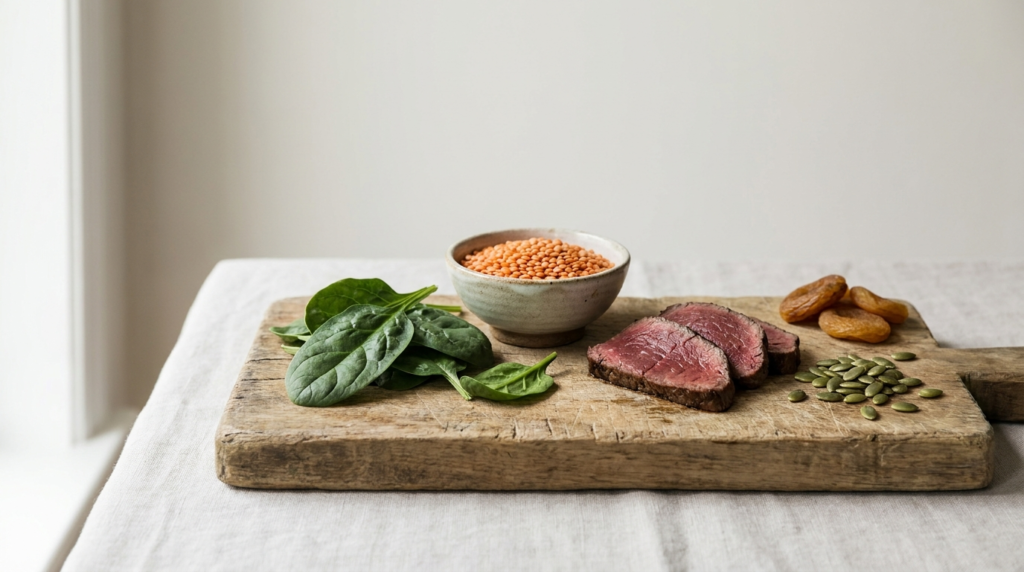
Animal sources (haem iron): red meat, liver, poultry, fish and shellfish.
Plant sources (non-haem iron): pulses such as lentils, chickpeas and beans; green vegetables such as spinach and kale; nuts and seeds such as pumpkin seeds, sesame and cashews; wholegrain foods; tofu and tempeh; and dried fruit such as apricots and raisins.
When a supplement makes sense, and how to take it
This is the part that matters most: don’t take iron without a confirmed deficiency. Your body can’t easily get rid of excess iron, so it builds up over time and, in the long run, can damage your liver, heart and other organs. Iron supplements are cheap, often just a few pounds a pack, but that low price is no reason to take them speculatively.
If you suspect you’re low, see your GP for a blood test measuring haemoglobin and ferritin. Only with those results can you tell whether a supplement is genuinely needed.
If a deficiency is confirmed:
- Follow the dose your doctor gives you
- Expect that most side effects are digestive: nausea, stomach pain, constipation, diarrhoea, and darker stools (which is normal)
- A lower dose, or taking it every other day, can ease those side effects
- For absorption, an empty stomach works best but tends to cause more stomach upset; either way, pair it with vitamin C and keep coffee, tea and dairy away from the time you take it
- Store it well out of reach of children
Frequently asked questions
What are the symptoms of iron deficiency?
Common signs include persistent tiredness, pale skin, getting out of breath easily, a pounding heart, headaches, dizziness, and cold hands and feet. Brittle nails and hair loss can also occur, and a significant shortfall can lead to anaemia with stronger symptoms. Because these signs have other possible causes, a blood test is the only way to be certain.
How can I improve my iron absorption?
Eat vitamin C with an iron-rich meal (peppers, citrus fruit or orange juice), which is particularly good for making plant-based iron more absorbable. At the same time, avoid coffee, tea and large amounts of dairy with the meal; it’s better to have them an hour before or after eating.
Why are women more likely to be low on iron?
Women who menstruate lose blood, and with it iron, every month, and heavy periods increase that loss considerably. Pregnancy also raises iron requirements. If you’re in one of these groups and have symptoms, it’s worth getting a blood test.
What happens if you get too much iron?
Your body can’t easily clear excess iron, so it accumulates. In the short term that can mean digestive upset such as nausea and stomach pain. Over the long term, a build-up can damage the liver, heart and other organs. Never take iron without a confirmed deficiency, and because an overdose can be dangerous for young children, always store it out of their reach.
What's the difference between haem and non-haem iron?
Haem iron, from animal products like meat and fish, is absorbed well. Non-haem iron, from plant sources such as pulses and vegetables, is absorbed far less efficiently. That’s why vegans and vegetarians need to pay extra attention to iron and pair it cleverly with vitamin C.
Do I need to take iron if I'm vegan or vegetarian?
Not automatically. A varied plant-based diet with plenty of pulses, vegetables, nuts, seeds and wholegrains can supply enough iron. Because plant iron is absorbed less readily, it helps to combine it with vitamin C and keep coffee and tea away from meals. If you have symptoms, get a blood test first before adding a supplement.