

Zinc is an essential trace mineral that supports your immune system, skin, hormones and recovery, but most people who eat a varied diet already get enough and don’t need a supplement. Your body can’t make or store zinc, so you have to get small amounts from food. It matters, yet more is not better. Here’s what zinc actually does, how much you need, and when a supplement is genuinely worth it, without the hype.
What zinc is good for
Zinc is involved in hundreds of processes in the body. The best-supported ones are:
- Immune function. Zinc helps your immune cells work normally. When you’re deficient, your defences don’t function as well.
- Skin, hair and nails. Zinc contributes to healthy skin and plays a part in wound healing.
- Hormones and fertility. Zinc has a role in normal testosterone production and normal fertility.
- Cell division and repair. It’s needed to build DNA and protein, so it matters for growth and tissue recovery.
- Taste and smell. A shortfall can dull both.
The key word is normal. Zinc helps these things run properly. Taking extra when you already get enough won’t push them above normal. Topping up a deficiency helps; loading up on top of a good diet doesn’t.
How much zinc do you need a day?
For adults the recommended intake sits roughly between 7 and 14 mg per day, depending on your sex and how much of your diet is plant-based.
- Adult women: around 7 to 9 mg a day.
- Adult men: around 9 to 14 mg a day.
- Pregnant women and people eating mostly plant-based often need a little more, because plant sources are absorbed less well.
The exact figures vary between guidelines, but the order of magnitude is always the same: a handful of milligrams a day. Most people on a varied diet hit that from food alone.
Deficiency: signs and who’s at risk
Severe zinc deficiency is rare in the UK, but a mild shortfall is more common, especially in certain groups. Possible signs include:
- Catching colds more often, or infections that linger.
- Cuts and grazes that heal slowly.
- Skin problems, dry skin or hair loss.
- Reduced taste or smell, tiredness and a poorer appetite.
These symptoms are vague and could point to plenty of other things, so you can’t diagnose a deficiency from how you feel alone. Groups with a higher risk:
- Vegans and vegetarians. Plant foods contain phytates that block absorption, so their real requirement is higher.
- Athletes who sweat a lot. You lose zinc through sweat, so heavy training can raise your needs.
- Older adults, through poorer absorption and often a narrower diet.
- People with gut conditions (such as Crohn’s) or who drink a lot of alcohol, because absorption is disrupted.
If you suspect a shortfall, don’t diagnose yourself or start high doses. See your GP, who can test it if needed and give proper advice.
Zinc in food: the best sources
The safest way to get your zinc is straight off your plate. Good sources:
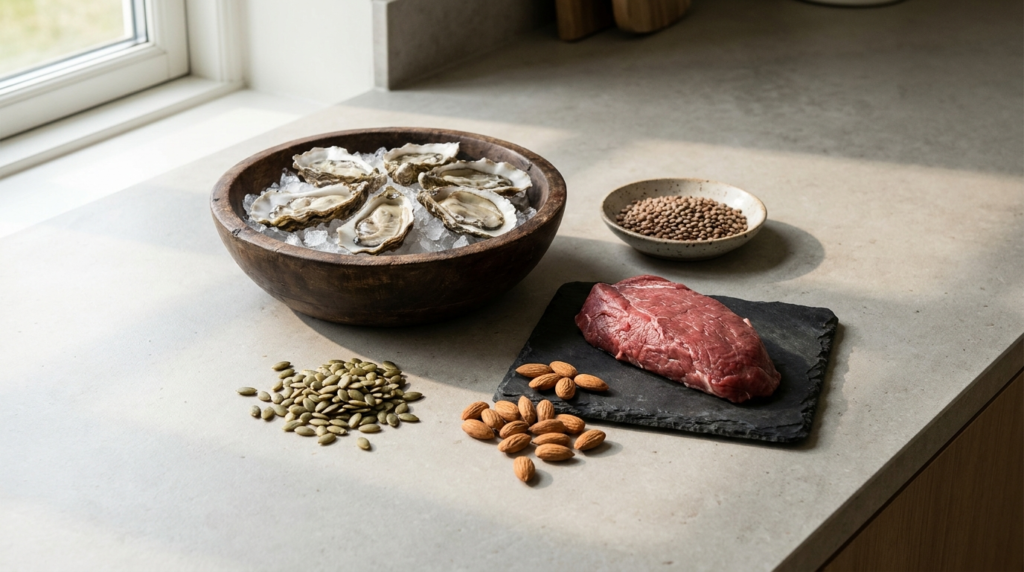
- Shellfish, with oysters by far the richest source.
- Meat, especially beef and lamb.
- Wholegrains, seeds (pumpkin, sesame) and nuts.
- Pulses such as lentils and chickpeas, plus cocoa and eggs.
Absorption matters: zinc from animal foods is taken up more easily than from plant sources, because grains and pulses contain phytates that hold it back. Soaking, sprouting, fermenting (sourdough) and cooking well all lower the phytate content and improve absorption, which is a useful trick if you eat plant-based.
When is a zinc supplement worth it?
For most people on a varied diet, a supplement isn’t needed. You get your zinc from food, and taking extra offers no measurable benefit. A supplement can make sense if you’re in a risk group or have a confirmed deficiency:
- You eat fully plant-based and don’t consciously seek out zinc-rich foods.
- You train hard and often, so you lose more through sweat.
- You have a condition or diet that reduces absorption.
- A deficiency has been confirmed by your GP.
The rule is simple: top up to close a gap, not to “boost” your health beyond normal. Going over the recommended amount when you already get enough doesn’t help, and over time it can do harm. A basic zinc supplement is cheap, but that’s no reason to take one you don’t need.
Dosage and the upper limit: why too much backfires
With zinc, more than most supplements, the message is: more is not better, and too much is a real risk. The safe upper limit for adults sits around 25 mg per day for total intake. Yet plenty of standalone zinc supplements pack 15, 25 or even 50 mg per capsule. Take a high dose like that for a long stretch and you’ll easily go over that limit.
The main long-term risk is a copper deficiency. Zinc and copper compete for absorption in your gut, so a chronically high zinc intake crowds copper out, and a copper shortfall can lead to anaemia and nerve problems. Too much zinc at once causes nausea, stomach pain and cramps. So keep a daily supplement under 25 mg unless a doctor advises otherwise.
Which form of zinc should you pick?
In a supplement, zinc is always bound to another molecule. That form mainly affects how well it’s absorbed and how it sits on your stomach. The common ones:
- Zinc bisglycinate (bound to glycine). A chelated form that’s usually well absorbed and gentle on the stomach. A solid all-rounder.
- Zinc picolinate. Also well absorbed.
- Zinc gluconate. Widely used, reasonably absorbed and relatively cheap. Often the form in cold-relief lozenges.
- Zinc citrate. Good absorption, neutral taste.
- Zinc oxide. Cheap but less well absorbed; often found in multivitamins.
Don’t just look at the form, look at the amount of elemental zinc on the label, because that’s the zinc that actually counts. For daily use, bisglycinate or gluconate around the recommended amount is a safe pick. For most people the differences between the good forms are small.
Interactions and when to take it
Zinc doesn’t work in isolation. A few things to keep in mind:
- Copper. High doses of zinc suppress copper absorption. If you take a lot of zinc long term, balance matters.
- Iron and calcium. In high doses these compete with zinc for absorption, so it’s better not to take high-dose supplements at the same time.
- Phytates from grains and pulses hold back absorption.
- Some medicines (certain antibiotics and water tablets) can interact with zinc. If you’re on medication, check with your GP or pharmacist.
When to take it? Zinc on an empty stomach can cause nausea, so take it with or just after a meal, but preferably not alongside a very high-fibre or phytate-rich meal, or a big dose of iron or calcium. Rule of thumb: take it with a light meal, separate from your multivitamin or iron supplement.
Zinc in short
Zinc supports your immune system, skin, hormones and recovery. Most people get enough from a varied diet and don’t need a supplement. Topping up is mainly worth it if you eat plant-based, train intensely, or have a confirmed deficiency. Keep a daily dose under 25 mg, choose a well-absorbed form, and take it with a light meal. Unsure whether you’re short? Don’t self-dose high, put it to your GP.
Frequently asked questions
How much zinc do I need a day?
For adults the recommended daily intake sits roughly between 7 and 14 mg, depending on your sex and how much of your diet is plant-based. Women are around 7 to 9 mg, men around 9 to 14 mg. Most people get this from food alone. The safe upper limit from supplements is about 25 mg a day.
Is zinc good for your skin?
Zinc contributes to normal, healthy skin and plays a part in wound healing. A zinc deficiency can bring on skin problems or slower-healing cuts. But if you already get enough zinc, taking extra won’t make your skin better than normal. For ongoing skin issues, a GP visit is wiser than self-dosing high.
Does zinc raise your testosterone?
Zinc has a role in normal testosterone production and in fertility. If you’re deficient, that can drag your testosterone down, and topping up can help bring it back to normal. But if you already get enough, extra zinc won’t push testosterone above normal. It’s a building block that only helps when there’s a shortfall, not a booster.
What happens if you take too much zinc?
Too much zinc at once causes nausea, stomach pain and cramps. The main long-term risk is a copper deficiency: zinc crowds copper out in your gut, which can lead to anaemia and nerve problems. Keep a daily supplement under the upper limit of about 25 mg, unless a doctor advises otherwise.
When is the best time to take zinc?
Zinc on an empty stomach can cause nausea, so take it with or just after a meal. Avoid taking it at the same time as a high dose of iron or calcium, and away from very high-fibre or phytate-rich meals, as those reduce absorption. A light meal, separate from your multivitamin or iron supplement, is ideal.
Do vegans or athletes need a zinc supplement sooner?
Both groups have a higher risk of a shortfall. Plant foods contain phytates that block zinc absorption, so vegans effectively need more. Athletes who sweat heavily lose extra zinc. For these groups a supplement can be worth it, but look at your diet first (seeds, pulses, wholegrains, soaked or fermented) before you start taking anything. If in doubt, get it checked by your GP.